
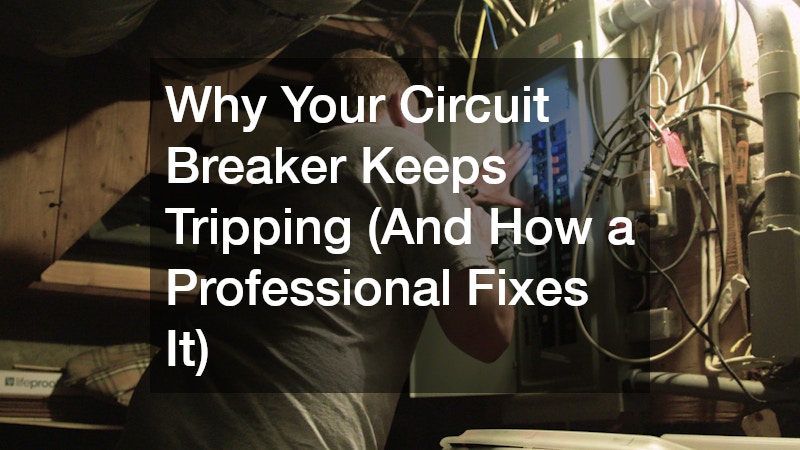
Few household disruptions are as frustrating as a circuit breaker that repeatedly trips. You are in the middle of vacuuming, cooking dinner, or running the air conditioner, and suddenly a room goes dark and silent. While resetting the switch at the breaker panel offers a temporary fix, a breaker that trips repeatedly is telling you that something is wrong.
Circuit breakers are critical safety devices designed to cut off electrical flow when currents reach dangerous levels. Ignoring a tripping breaker increases the risk of damaged appliances, melted wiring, and even electrical fires.
Understanding why your breaker keeps tripping—and how licensed experts resolve the underlying cause—helps protect your home and family.
Common Reasons Your Circuit Breaker Keeps Tripping
Circuit breakers do not trip randomly; they react to specific electrical anomalies. Identifying which condition is triggering your panel is the first step toward a permanent solution.
1. Circuit Overloads
An overloaded circuit is the most frequent cause of a tripped breaker. Every circuit in your home is designed to handle a maximum electrical capacity measured in amps. When you plug in and operate too many high-draw devices—such as space heaters, hair dryers, microwave ovens, or window air conditioners—on a single circuit, the total demand exceeds the breaker’s rated limit. The breaker trips to prevent the wires from overheating and catching fire.
2. Short Circuits
A short circuit is a more serious issue that occurs when a hot wire touches a neutral wire inside an outlet, appliance, or junction box. This direct contact creates a sudden, massive spike in current that instantly trips the breaker. Short circuits are often accompanied by a popping sound, a faint burning smell, or visible black scorch marks around outlets or light switches.
3. Ground Faults
Ground faults are similar to short circuits and occur when a hot wire comes into contact with a grounded surface, such as the metal casing of an appliance, a ground wire, or bare wood framing. Ground faults frequently happen in areas where moisture is present, such as kitchens, bathrooms, basements, and outdoor outlets, because water readily conducts electricity.
4. Faulty or Aging Breakers
Sometimes the issue lies within the breaker panel itself. Circuit breakers contain internal mechanical components that wear down over time. An aging, weak, or defective breaker may trip under normal, safe electrical loads simply because it can no longer regulate current effectively.
How a Professional Electrician Diagnoses the Problem
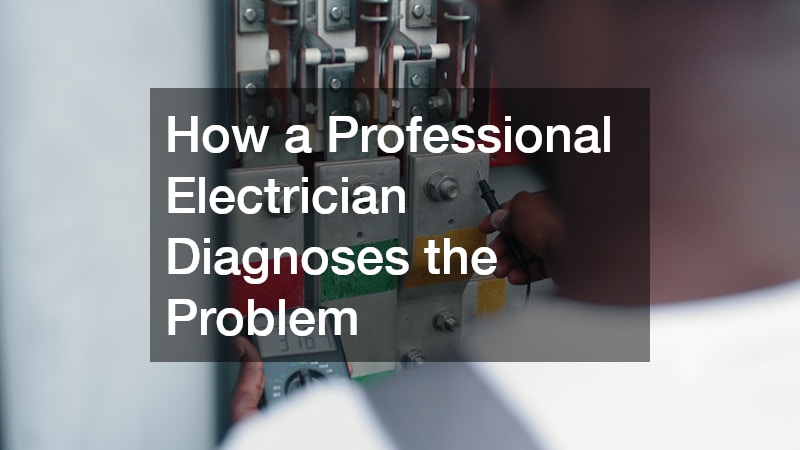
While a homeowner can easily reset a switch, diagnosing the root cause of an unstable circuit requires specialized training and equipment. Attempting to troubleshoot complex panel issues or high-voltage wiring without professional expertise poses severe risks of electric shock.
When you contact qualified electricians they follow a thorough diagnostic procedure to isolate the exact source of the failure:
- Load Calculation and Circuit Mapping: Technicians evaluate total power consumption on the affected circuit to determine if household electricity demands exceed the circuit’s capacity.
- Voltage and Continuity Testing: Using digital multimeters, experts test voltage levels across the breaker, outlets, and switches to detect short circuits, voltage drops, or broken conductors.
- Panel Inspection: Technicians inspect the main service panel for loose terminal screws, corroded bus bars, scorched insulation, or outdated components that require immediate attention.
- Thermal Imaging: Modern diagnostic tools like infrared cameras allow electricians to detect hidden hot spots within walls or panel connections before severe damage occurs.
How Professionals Fix Tripping Breakers
Once the diagnosis is complete, a licensed electrician implements a targeted, code-compliant repair to restore safe and reliable power.
Rebalancing or Adding Dedicated Circuits
If your breaker trips due to an overload, adding extra outlets on the same circuit will not resolve the problem. Electricians fix overloads by rebalancing household circuits or installing new, dedicated circuits. Heavy-draw appliances—such as electric ranges, EV chargers, water heaters, and central AC systems—require their own direct lines from the main panel to prevent interference with general household lighting and outlets.
Repairing Damaged Wiring and Components
If a short circuit or ground fault is identified, technicians trace the wiring to locate damaged insulation, loose wire nuts, or faulty receptacle boxes. They replace degraded wiring, install updated switches or outlets, and ensure all connections are properly secured and grounded.
Replacing Faulty Breakers or Upgrading the Service Panel
When a breaker itself has failed, replacing it with a correctly rated, compatible unit solves the issue. However, if your home still uses an outdated panel or lacks sufficient amperage for modern electronics, an experienced electrician may recommend a complete panel upgrade. Installing a modern 200-amp service panel provides ample capacity, upgraded safety features, and room for future expansion. Working with dependable electricians in Old Saybrook, CT ensures that repairs comply with local building codes and modern safety standards, giving you long-term peace of mind.
Restoring Safety and Peace of Mind
A tripping circuit breaker should never be treated as a routine nuisance or ignored with repeated resets. It is your home’s built-in defense mechanism warning you of an electrical imbalance or hazard. By partnering with professional electricians in Old Saybrook, CT, you can quickly diagnose the root cause, repair underlying hazards, and safeguard your home’s electrical system for years to come.